
Sociodemographic and obstetric determinants of HIV infection among pregnant women in Cameroon: a contribution toward the elimination of vertcal transmission in low-and middle-income countries
mai 7, 2026
People living with HIVco-infected with HBV at theNkembo Outpatient TreatmentCenter, Gabon: prevalence andassociated factors
mai 7, 2026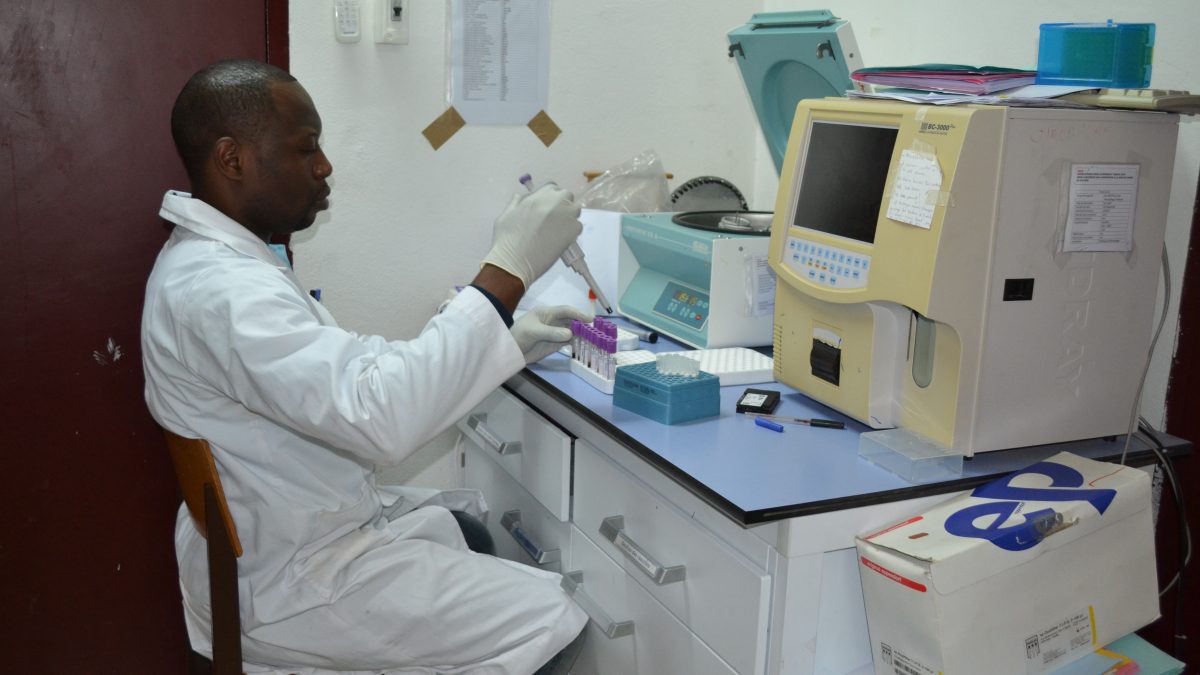
Par Michel Tommo Tchouaket et al.
Background: Nasopharyngeal swabs (NASO) cause discomfort for patients, which can discourage them from getting tested for COVID-19 and limit case detection. It is therefore necessary to consider an alternative, more comfortable swab.
Aim: Evaluated the concordance between nasopharyngeal and oropharyngeal sampling forCOVID-19 diagnosis in the Cameroonian context.
Setting: This study was carried out at “Chantal Biya” International Reference Centre for Research on HIV/AIDS Prevention and Management (CIRCB) in Yaoundé, Cameroon.
Methods: A comparative study was conducted in April 2021 among consenting participants tested for COVID-19 at “Chantal Biya” International Reference Centre for Research on HIV/ AIDS Prevention and Management (CIRCB) in Yaoundé, Cameroon. Sampling began with nasopharyngeal swabs, followed by oropharyngeal swabs, all taken by the same technician, and analysis was carried out using polymerase chain reaction (PCR) tests on the Abbott platform. Statistical analyses were performed using GraphPad version 6.0; p < 0.05 was considered statistically significant.
Results: A total of 154 participants were enrolled (59.7% male, median age 38 years, interquartile range [IQR]: 30–49). Following PCR testing, the overall COVID-19 positivity rate was 36.36% (56/154), with 34.41% (n = 53/154) in nasopharyngeal versus 16.23% (n = 25/154) in oropharyngeal samples, p < 0.0002. The overall concordance rate was 78% (n = 120/154), with 39.28% positive concordance and 74.24% negative concordance (kappa = 0.441 [0.289–0.513]). According to severe acute respiratory syndrome coronavirus 2 viral load, the positive concordance was improved with high viral load (cycle threshold [CT]: ≤ 25): 61% (n = 11/18) versus 31% (n = 11/35) with low viral load (CT > 25), p = 0.037; odds ratio (OR) = 3.43. According to gender, the positive concordance was higher in men, 55% (n = 16/29), versus 25% (n = 6/24) in women, p = 0.021; OR = 0.27. Using nasopharyngeal swab as the gold standard, oropharyngeal swab had a sensitivity of 41.50% (n = 22/53), specificity 97.02% (n = 98/101), positive predictive value (PPV) 88% (n = 22/25) and negative predictive value (NPV) 76% (n = 98/129).
Conclusion: Our evidence suggests a superiority effect of nasopharyngeal in detecting cases of COVID-19. However, the overall high PPV of oropharyngeal swab, and its improved performance with high viral load.
Contribution: Therefore, in case of counter-indication to nasopharyngeal swabbing, oropharyngeal can be an acceptable alternative.
Keywords: concordance; COVID-19; nasopharyngeal swabs; oropharyngeal swabs; detection.